


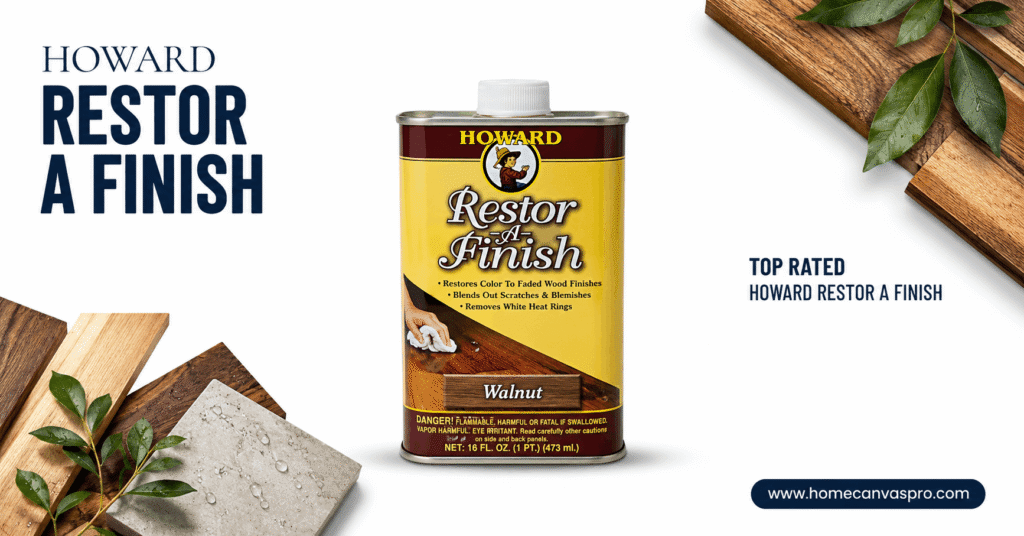
Your grandmother’s side table looks dull and scratched. You don’t want to strip it down and start over. That’s exactly where Howard Restor A Finish steps in. It’s a wood finish reviver that fills minor scratches, restores color, and brings back that warm, healthy glow—without any of the heavy work.
I picked up my first bottle years ago for a beat-up mahogany dresser. Honestly, I didn’t expect much. But the results stopped me cold.
What is Howard’s restore finish, exactly?
It’s not a polish. It’s not a wax. And it’s definitely not a paint or stain.
Howard Restor A Finish is a penetrating finish reviver. It soaks into the existing finish rather than sitting on top of it. That’s what makes it different from furniture polish or wipe-on oils.
The formula works by re-amalgamating the existing finish. In plain terms, it softens and blends damaged surface layers back together. Minor scratches, white rings from glasses, and cloudiness all respond really well to this treatment.
It comes in multiple wood-tone shades — walnut, mahogany, golden oak, dark oak, cherry, and a neutral option. The tinted versions add a subtle color correction as they work. So if your finish has faded unevenly, the right shade helps blend everything back.
It won’t fix deep gouges or areas where the finish is completely gone. But for surface-level wear? It’s hard to beat.
When should you reach for Howard Restor A Finish?
Not every piece of furniture needs stripping. Most don’t, actually. Howard Restor A Finish is the right call in several situations.
Faded or dull finish. UV light breaks down wood finishes over time. If your furniture looks washed out, this product can restore depth and tone.
White rings and heat marks. These are caused by moisture trapped in the finish layer. The re-amalgamating action pulls those blemishes back into the finish.
Light scratches. Scratches that haven’t gone through to bare wood respond well. Deep scratches that expose raw grain need more serious repair first.
Uneven color. Sun hits one side of a table more than the other. Over years, that creates noticeable fading. The tinted versions of Howard Restor A Finish can bring things back into balance.
Before selling or gifting a piece. I’ve noticed that a single treatment can make a piece look like it’s been professionally restored. That matters when you’re trying to give something a new home.
What it won’t help with: peeling finish, deep gouges, severe water damage, or bare unfinished wood. Those need different solutions entirely.
How to Use Howard Restor A Finish Step by Step
The process is simple. That’s a big part of its appeal.
What You’ll Need
- A bottle of Howard Restor A Finish in the right shade
- 0000 steel wool or a soft cloth
- A clean dry cloth for buffing
- Mild cleaner like Murphy Oil Soap for prep
Step 1: Clean the surface.
Don’t skip this. Wax, polish, and grime on the surface will prevent the product from penetrating properly. Wipe the piece down with a damp cloth and a small amount of mild cleaner. Let it dry fully before moving on.
Step 2: Apply with Steel Wool or Cloth
Pour a small amount onto 0000 steel wool. That’s the ultra-fine grade — it won’t scratch the surface. Work in the direction of the wood grain. Use light, even pressure.
You don’t need to scrub hard. Let the product do the work. You’ll see the finish start to shift almost immediately on most pieces.
Step 3: Wipe and Buff
After working a section, wipe away the excess with a clean cloth. Then buff lightly in the direction of the grain. You’ll see the sheen develop as you work.
Step 4: Let It Cure
Give it at least an hour before putting anything on the surface. For best results, let it sit overnight before applying any wax or polish over the top.
Choosing the Right Shade of Howard Restora-Finish
This is where people sometimes go wrong. Picking the wrong shade can shift the color of your piece noticeably.
Here’s a simple approach. Look at the original tone of the wood when it was in good condition. If you’re unsure, go one shade lighter—you can always do a second application with a slightly darker shade.
- Walnut — dark brown tones, good for traditional pieces
- Mahogany — reddish-brown, classic antique furniture
- Golden Oak — warm honey tones, common in mid-century pieces
- Dark Oak — deeper brown, aged oak furniture
- Cherry — reddish with a warm glow
- Neutral — no color shift, good for testing or light finishes
When in doubt, test on a hidden spot first. The underside of a table apron or the back of a drawer front are good test spots. Let it dry and check the color in natural light before committing to the full piece.
The folks over at Bob Vila’s restoration guides cover color matching in more depth if you want to go further on that topic.
What Results Can You Realistically Expect?
Let’s be straight about this. Howard Restor A Finish is excellent at what it does. But expectations matter.
On a piece with light to moderate wear, the improvement is often dramatic. Scratches soften or disappear. Color evens out. The finish looks alive again.
On a heavily damaged piece—deep scratches, lifting finish, bad water damage—the results will be limited. You might get some improvement, but the underlying damage will still show.
The Fine Woodworking community is a good resource if you’re trying to figure out whether a piece needs light revival or more serious restoration work. Sometimes a few opinions from experienced woodworkers save a lot of guesswork.
In my experience, pieces with lacquer or shellac finishes respond the best. Oil-based polyurethane finishes respond more slowly but still show improvement. Conversion varnishes can be harder to work with.
Can You Use It on Any Wood Furniture?
Mostly yes, with a few caveats.
Howard Restor A Finish works on most finished wood surfaces—antiques, mid-century modern pieces, cabinets, tables, chairs, and dressers. It’s safe for lacquer, shellac, varnish, and most oil finishes.
But it’s not for every surface. Avoid using it on:
- Unfinished or raw wood (it’ll absorb unevenly)
- Oil-waxed furniture (Rubio Monocoat and Osmo-type finishes react differently)
- Painted surfaces
- Leather or fabric
And be careful with veneer. Very thin veneer over particleboard can bubble if too much liquid is applied. Use a cloth rather than steel wool on veneer, and apply sparingly.
Pairing howard restor a finish with Other Products
Once you’ve applied and buffed the finish reviver, you’ve got options for the next step.
Many woodworkers follow up with a paste wax for added protection. Howard Feed-N-Wax is a natural follow-up from the same brand. It adds a layer of beeswax and orange oil that protects the refreshed surface.
You don’t have to use the same brand. Any good paste wax applied over the cured finish reviver adds durability. Just make sure the surface has fully cured before applying wax—otherwise the wax traps the solvent and clouds the finish.
Avoid applying polish sprays directly after treatment. Most spray polishes contain silicone. Silicone interferes with the finish and causes adhesion problems if you ever need to refinish the piece down the road.
Is Howard Restor A Finish Worth It for Antiques?
Short answer: yes, usually.
Antique furniture collectors often prefer conservative restoration approaches. Stripping and refinishing an antique can actually reduce its value. A light treatment with Howard Restor A Finish preserves the original patina while addressing surface damage.
Dealers at antique markets use this regularly. It’s become something of a trade staple for quick, non-destructive restoration. And because it’s reversible — meaning you can strip it off if needed — it doesn’t compromise future restoration options.
Just be thoughtful with very valuable pieces. If you’re working on something potentially worth significant money, get an appraisal first and consult a professional conservator before doing anything.
Howard Restor A Finish Wrap-Up
Howard’s restoration finish won’t perform miracles. But for what it’s designed to do, it really does deliver.
It’s affordable, easy to use, and requires no special skills or equipment. Most people who try it come back to it again and again. I keep a bottle on hand specifically for thrift store finds that need a quick revival.
If you’ve got tired, wooden furniture sitting around looking worse than it should, give it a shot. Clean the surface, apply with 0000 steel wool, and buff it out. The whole process takes less than 30 minutes on most pieces.
And you’ll probably be surprised at what comes back.
Also Read: Vinyl Storage Shelf: How to Store Records the Right Way