

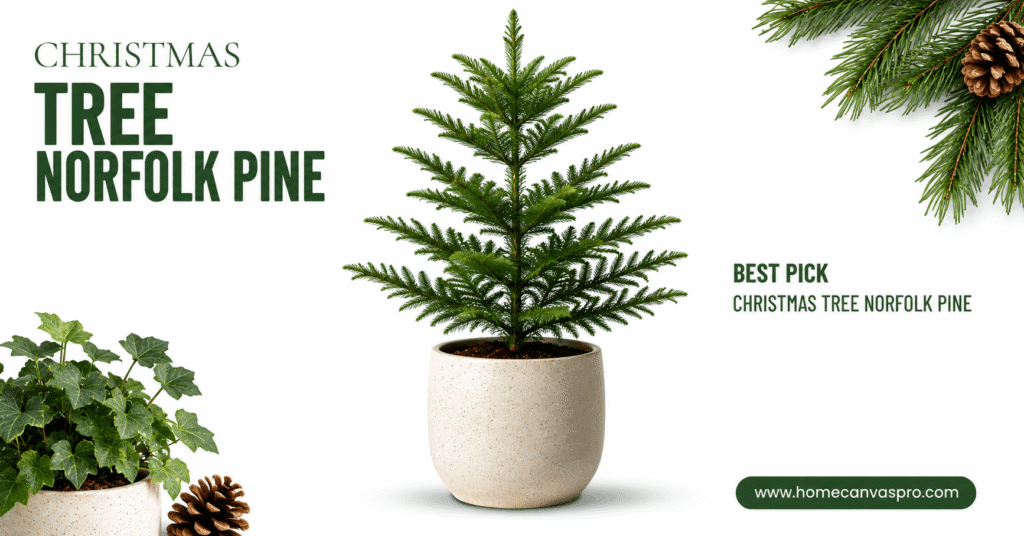
So you picked up one of those adorable little trees, a Norfolk Island pine Christmas tree, at the garden center, and now you’re wondering if it will actually survive past the holidays. I get it. I’ve been there. These trees look festive and charming, but they’re a little different from your average houseplant.
Let me walk you through everything you need to know.
What Exactly Is a Christmas Tree Norfolk Pine?
First, let’s clear something up. Despite the name, the Norfolk Island pine isn’t actually a true pine. It belongs to the Araucaria family. It just looks like a miniature Christmas tree, which is why it gets sold by the millions every December.
It originates from Norfolk Island, a tiny island in the South Pacific. Out in the wild, these trees grow massively—up to 200 feet tall. Indoors, they stay manageable. Most top out around 6 to 8 feet inside your home.
The soft, layered branches give it that classic triangular shape. And honestly, it’s one of the prettier houseplants you can own year-round.
Why People Love the Christmas Tree Norfolk Pine
There’s something special about a plant that doubles as holiday décor. You can string lights on it in December. You can hang small ornaments. And then in January, you just… keep it. No dragging a dead tree to the curb.
I’ve noticed that most people buy them as seasonal decorations and accidentally fall in love with them as permanent houseplants. That’s exactly what happened to me.
And here’s the thing — they’re actually not that hard to care for once you understand what they need.
Light Requirements for Your Christmas Tree Norfolk Pine
This is the big one. Get the light wrong, and your tree will slowly decline. Get it right, and it’ll thrive for years.
Norfolk pines love bright, indirect light. A spot near a south or east-facing window is ideal. They can handle a few hours of direct morning sun. But harsh afternoon sun through glass can scorch the needles.
In my experience, low-light corners are a death sentence for these trees. The branches start drooping. The lower tiers turn brown and drop off. It’s a slow, sad process.
If your home doesn’t get much natural light, a full-spectrum grow light placed 6 to 12 inches above the tree can genuinely make a difference. Run it for 12 to 14 hours daily during winter months.
Watering: The Most Common Mistake
Here’s where most people go wrong. They either overwater or they forget the plant exists for weeks.
Norfolk pines like consistently moist soil — not soggy, not bone dry. The sweet spot is letting the top inch of soil dry out before watering again. Stick your finger in the soil. If it still feels damp, wait another day or two.
Overwatering causes root rot. The roots literally suffocate. Underwatering causes needle drop and branch dieback. Neither is fun to deal with.
Use room-temperature water when possible. Cold water can shock the roots. And always make sure your pot has drainage holes. Standing water at the bottom is a problem waiting to happen.
Humidity and Temperature: What the Christmas Tree Norfolk Pine Really Wants
These trees come from a humid island environment. Most homes — especially in winter with the heat running — are far too dry.
Low humidity causes the needle tips to turn brown. You’ll notice it first on the inner branches. It’s one of the most common complaints from Christmas tree Norfolk pine owners.
A few ways to boost humidity:
- Pebble tray with water placed beneath the pot
- Humidifier nearby (this is the most effective option)
- Misting the foliage every couple of days
The American Society for Horticultural Science notes that tropical and subtropical plants consistently perform better in humidity levels above 50%. Norfolk pines fall right into that category.
Temperature-wise, keep them between 60°F and 75°F (15°C to 24°C). Don’t place them near heating vents or drafty windows. Sudden temperature swings stress the tree.
Soil and Fertilizing Your Christmas Tree Norfolk Pine
Norfolk pines aren’t heavy feeders. They do best in a well-draining, slightly acidic potting mix. A standard indoor potting soil mixed with a bit of perlite works well. This keeps roots aerated and prevents waterlogging.
Fertilize during the growing season—spring through early fall. Use a balanced liquid fertilizer, diluted to half strength, once a month. Don’t fertilize in winter. The plant is in a rest phase and doesn’t need it.
Over-fertilizing is actually worse than under-fertilizing with these trees. Too much fertilizer causes salt buildup in the soil, which burns the roots.
Repotting: How and When
A Christmas tree Norfolk pine doesn’t love being repotted. It’s slightly root-bound-tolerant. But when you see roots circling the bottom of the pot or poking out of the drainage holes, it’s time.
Repot in spring, one pot size up at a time. Don’t jump from a 6-inch pot to a 12-inch pot. Too much extra soil holds water and causes rot.
When repotting, be gentle with the roots. These trees don’t bounce back quickly from root damage. Set the tree at the same depth it was sitting before. Water thoroughly after repotting and place it back in its usual bright spot.
Decorating Your Christmas Tree Norfolk Pine
This is where the fun part comes in. These trees are genuinely beautiful when decorated. But keep a few things in mind.
Use lightweight ornaments only. Heavy decorations can permanently bend the soft branches. And if you’re adding lights, use LED lights. They produce less heat and reduce the risk of drying out the needles.
According to Better Homes & Gardens, living Christmas trees like the Norfolk pine are an increasingly popular, sustainable alternative to cut trees. They last for years with proper care.
Tinsel, heavy garland, or flocking spray—skip all of that. These look pretty but can clog the needles and suffocate new growth.
Common Problems and How to Fix Them
Brown needle tips: Almost always a humidity issue. Boost moisture levels around the plant.
Yellowing lower branches: Could be overwatering, low light, or natural aging of the oldest branches. Check soil moisture and light levels first.
Drooping branches: Often caused by underwatering or low light. Give it a good drink and move it closer to a window.
Pests: Spider mites love dry conditions. Check under the needles regularly. A diluted neem oil spray handles most pest issues effectively. The Royal Horticultural Society has a solid guide on identifying and treating common houseplant pests.
Can a Christmas tree, a Norfolk pine, live outdoors?
Yes, but only in the right climate. These trees are hardy in USDA zones 10 and 11. That means parts of southern Florida, Hawaii, and coastal California.
If you live somewhere with frost, keep it strictly indoors. A single hard freeze will kill it.
But during summer, you can move it outside to a shaded patio. Outdoor humidity and natural light do wonders for its growth. Just bring it back inside before nighttime temperatures drop below 50°F (10°C).
The Long Game: Growing Your Christmas Tree Norfolk Pine for Years
These trees grow slowly indoors — maybe 3 to 6 inches per year under good conditions. That’s actually a plus. You’re not constantly dealing with a massive, overgrown plant.
With proper care, a Norfolk Island pine Christmas tree can live for decades. Some indoor specimens have been kept alive for 20 to 30 years. That’s a long-term relationship with a houseplant.
And honestly, there’s something deeply satisfying about a plant that comes in as a holiday decoration and becomes a permanent part of your home. Every year you pull out the tiny ornaments, hang them on the branches, and the whole thing comes full circle.
Wrapping Up
A Christmas tree Norfolk pine is one of those plants that reward patience and attention. It’s not fussy if you meet its basic needs—bright light, consistent moisture, and decent humidity.
Don’t treat it like a temporary holiday prop. Give it a good home, check in on it regularly, and it’ll reward you with years of that gorgeous, symmetrical green silhouette. And every December, you’ve got your own living Christmas tree ready to go.
That’s a pretty good deal.
Also Read: Howard Restor A Finish: Revive Wood Without Stripping